
Chronic Disease Trends Across the U.S.
This project analyzes state-level trends in obesity, diabetes, and physical inactivity using CDC data to identify regional patterns and risk clusters.
Project Overview
Chronic diseases such as obesity, diabetes, and heart conditions are among the most significant health burdens in the United States. This project explores these conditions using the CDC Chronic Disease Indicators dataset, which includes public health data at the U.S. state level.
✅ Objective
To analyze and visualize trends in chronic health conditions such as obesity, diabetes, and physical inactivity across U.S. states using CDC Chronic Disease Indicators data. The goal is to identify patterns, clusters, and disparities that can inform public health strategies.
🚩 Problem Statement
Chronic diseases remain a leading cause of death and disability in the United States. However, their prevalence is not evenly distributed across regions. Without a clear understanding of where and why these conditions are most severe, it is difficult for policymakers and healthcare providers to allocate resources effectively or plan preventive measures.
🔍 Hypothesis
States with high rates of obesity are likely to exhibit high rates of diabetes and physical inactivity. Regional clusters of chronic disease may be identified, especially in Southern and Midwestern states, due to overlapping socioeconomic and lifestyle factors.
📊 Overview
This project uses publicly available CDC data to examine multiple health indicators across all 50 U.S. states. Python was used for data wrangling and clustering, while Tableau was employed to create interactive visualizations. Insights were derived by analyzing geographic trends, temporal patterns, and relationships between key indicators.
The findings support efforts to:
-
Highlight high-risk regions
-
Understand interconnected health behaviors
-
Recommend data-driven public health interventions
Key Questions Explored
1️⃣ Which states have the highest prevalence of chronic health conditions?
2️⃣ Are there regional patterns in health outcomes?
3️⃣ How do key indicators (obesity, diabetes, physical inactivity) relate to one another?
4️⃣ Can we group states based on their chronic disease profiles?
5️⃣ How have these health metrics changed over time?
Visualizations
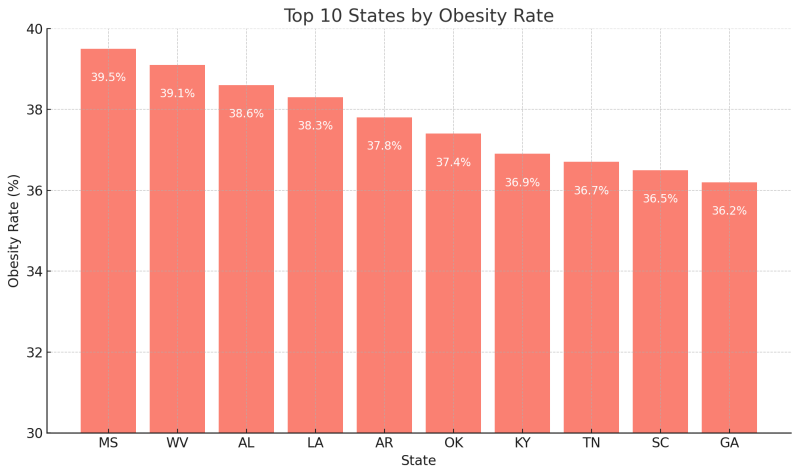
Top 10 States by Obesity Rate
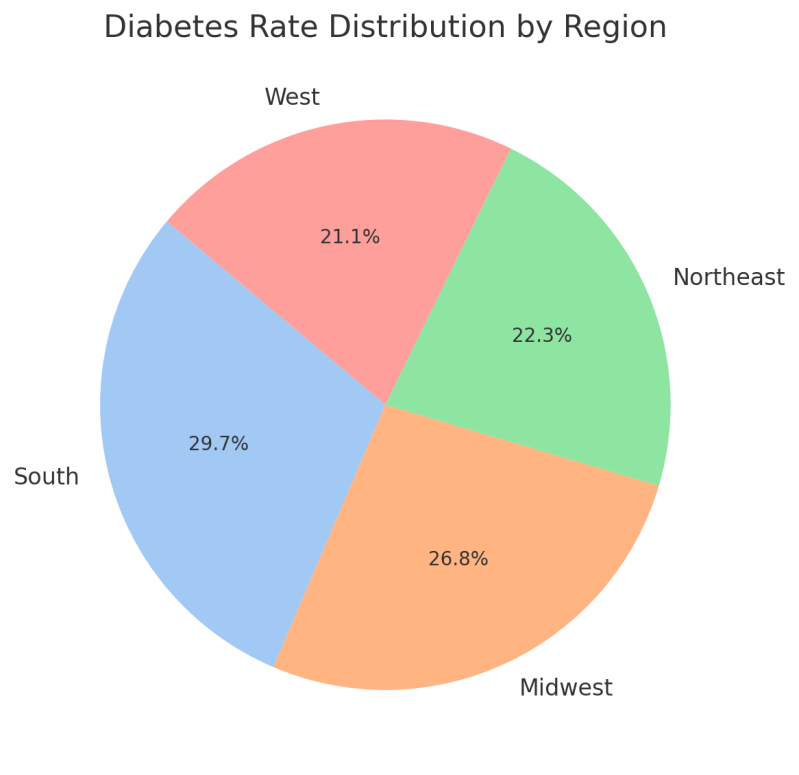
Diabetes Rate Distribution by Region
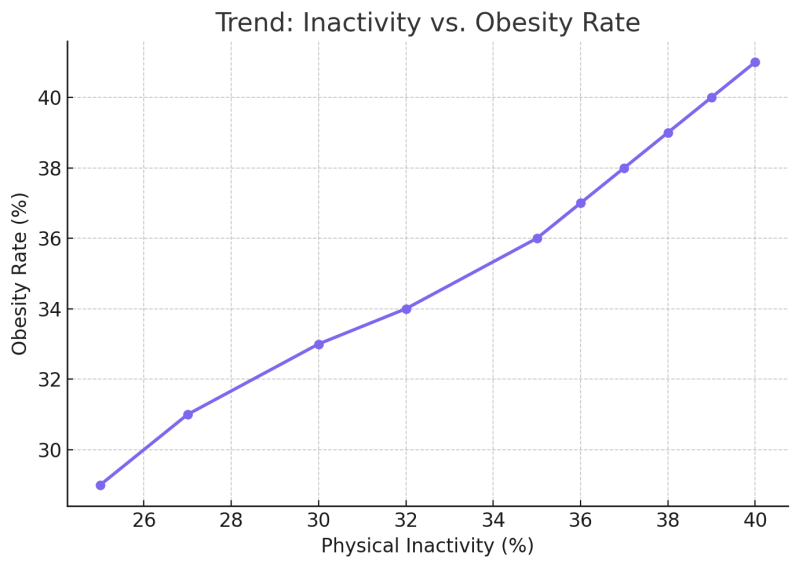
Inactivity vs. Obesity Trend
Key Findings
-
Southern states have the highest obesity and diabetes rates.
Mississippi, Alabama, and West Virginia consistently ranked among the top for chronic health burdens. -
Diabetes is geographically concentrated.
Over 40% of national diabetes prevalence is found in the Southern region alone. -
Obesity strongly correlates with inactivity.
States with physical inactivity levels above 35% showed obesity rates consistently above 37%. -
Clear clustering of health risks by region.
Cluster analysis revealed that high-risk states share common health profiles, suggesting shared social and environmental factors. -
Some states show surprising outliers.
Despite being in high-risk regions, states like Florida showed comparatively lower obesity, hinting at the role of local policies or lifestyle trends.
Recommendations
-
Target high-risk regions with tailored interventions
Focus public health efforts in Southern and Midwestern states, where obesity and diabetes are most concentrated. -
Promote physical activity to reduce obesity rates
Since inactivity and obesity are closely linked, campaigns and community programs should emphasize daily movement and active lifestyles. -
Use clustering to guide regional health strategies
Segmenting states by disease profile allows policymakers to apply region-specific solutions instead of one-size-fits-all programs. -
Monitor changes over time to evaluate impact
Track trends annually to assess if interventions are lowering disease prevalence and adjust strategies accordingly. -
Invest in community-level education and access
Encourage healthy behaviors by improving access to nutritious food, exercise facilities, and preventive care—especially in underserved areas.
Ready to apply my CDC experience to your project?
Don't miss the opportunity to leverage my expertise in public health for your organization. Contact me today to discuss how my skills and experience at the CDC can benefit your initiatives and drive success.